The History of Isuzu
Isuzu Motors Ltd., headquartered in Yokohama, Japan, holds the prestigious title of Japan's oldest automaker.
The story began in 1916 when Tokyo Ishikawajima Shipbuilding and Engineering Co., Ltd. partnered with Tokyo Gas and Electric Industrial Co. to build automobiles. By 1922, they produced Japan's first domestically produced car, the Wolseley model A-9.
The name "Isuzu" (meaning "fifty bells") was officially adopted in 1949, named after the Isuzu River that flows past the Grand Shrine of Ise, one of Japan's most sacred sites.
Over the decades, Isuzu shifted its focus from passenger cars to becoming a global titan in commercial vehicles and diesel engine manufacturing. Their philosophy, "Trucks for Life," reflects a commitment to building durable, reliable, and efficient vehicles that drive the global economy forward. Today, Isuzu diesel engines are so respected that they are used by dozens of other manufacturers worldwide.
Global Reach & Dealerships
Isuzu's presence is truly global, with a massive market share in Asia, Africa, Australia, and the Americas. The brand is synonymous with logistics and heavy lifting.
Why Global Buyers Trust Edwin Kibira Isuzu
Based in Nairobi, Kenya, we serve not just the local market, but act as a pivotal hub for East Africa and beyond.
- Unmatched inventory of N-Series, F-Series, and specialized heavy-duty commercial chassis.
- Expert export consultation for cross-border African logistics.
- State-of-the-art diagnostic and service center capable of handling the most advanced Isuzu telematics.
Legendary Engine Tech
Isuzu is arguably the world's leading manufacturer of diesel engines, having produced over 25 million engines. Their powerplants are famous for low-end torque, incredible fuel efficiency, and bulletproof reliability.
The 4JJ3-TCX (3.0L)
An evolution of the legendary 4JJ1, this 3.0-liter turbo-diesel is a masterpiece. It features a new engine block, cylinder head, and a high-pressure common-rail fuel injection system. It delivers 140kW of power and 450Nm of torque.
The 4HK1-TCC (5.2L)
A workhorse of the commercial fleet. This 5.2-liter, 4-cylinder, 16-valve engine uses a Variable Geometry System (VGS) turbocharger. It offers massive flat-torque curves, ensuring commercial trucks can pull maximum payloads up steep gradients.
The 6HK1-TCN (7.8L)
A massive 6-cylinder powerplant for heavy-duty applications. Renowned for its durability in harsh environments, it provides the brute force needed for tippers, mixers, and long-haul cargo transport.
The RZ4E-TC (1.9L)
Isuzu's answer to modern emission standards. This compact, highly efficient 1.9L engine uses advanced friction-reduction tech to deliver impressive power (110kW/350Nm) with incredibly low fuel consumption.
The Commercial Titans
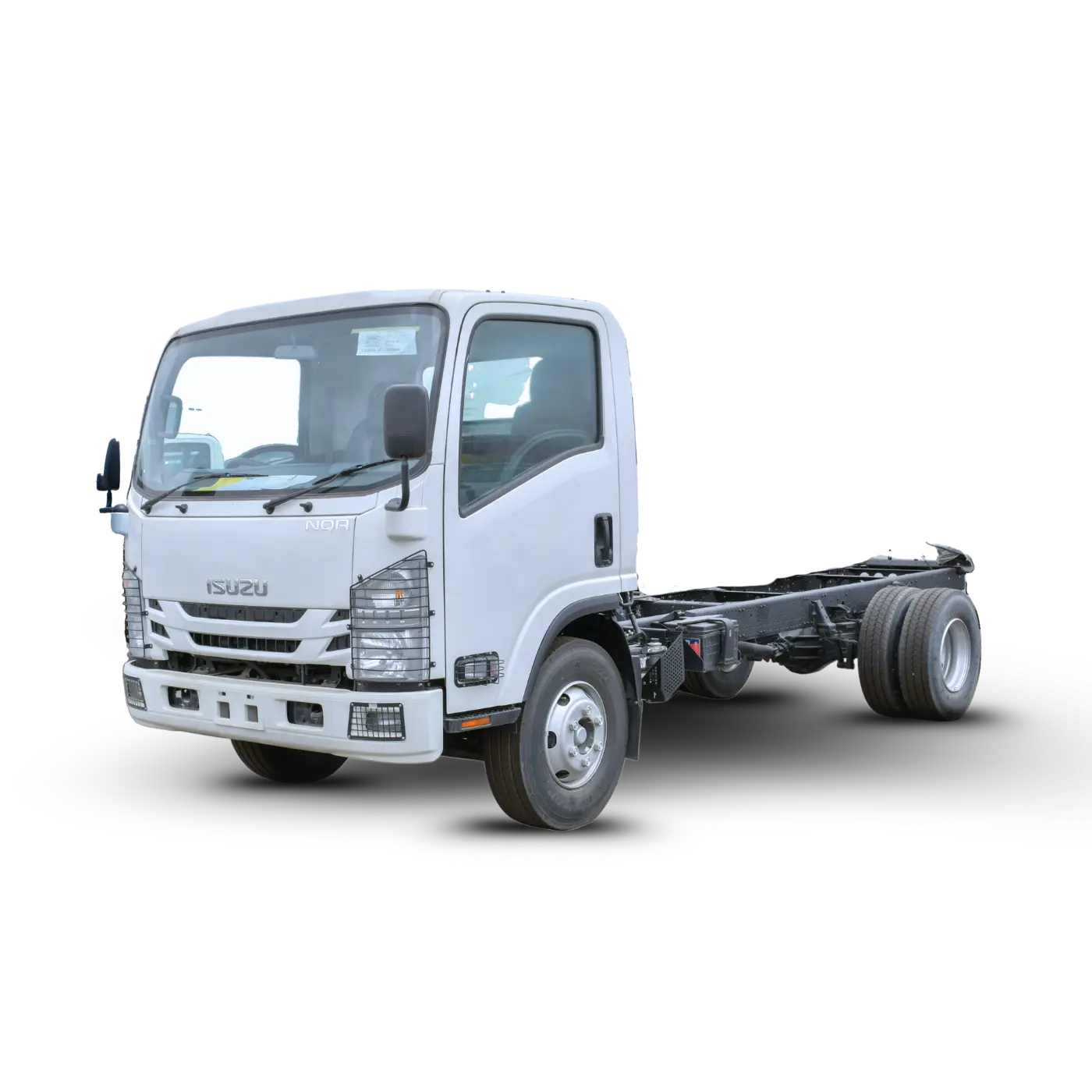
N-Series (Light-Duty)
The N-Series (known globally as the Elf) is the world's best-selling light-duty truck. Models like the NLR, NMR, and the powerhouse NQR offer incredible maneuverability for urban environments. They feature spacious Hexapod cabins, excellent visibility, and chassis designed for easy body-building.
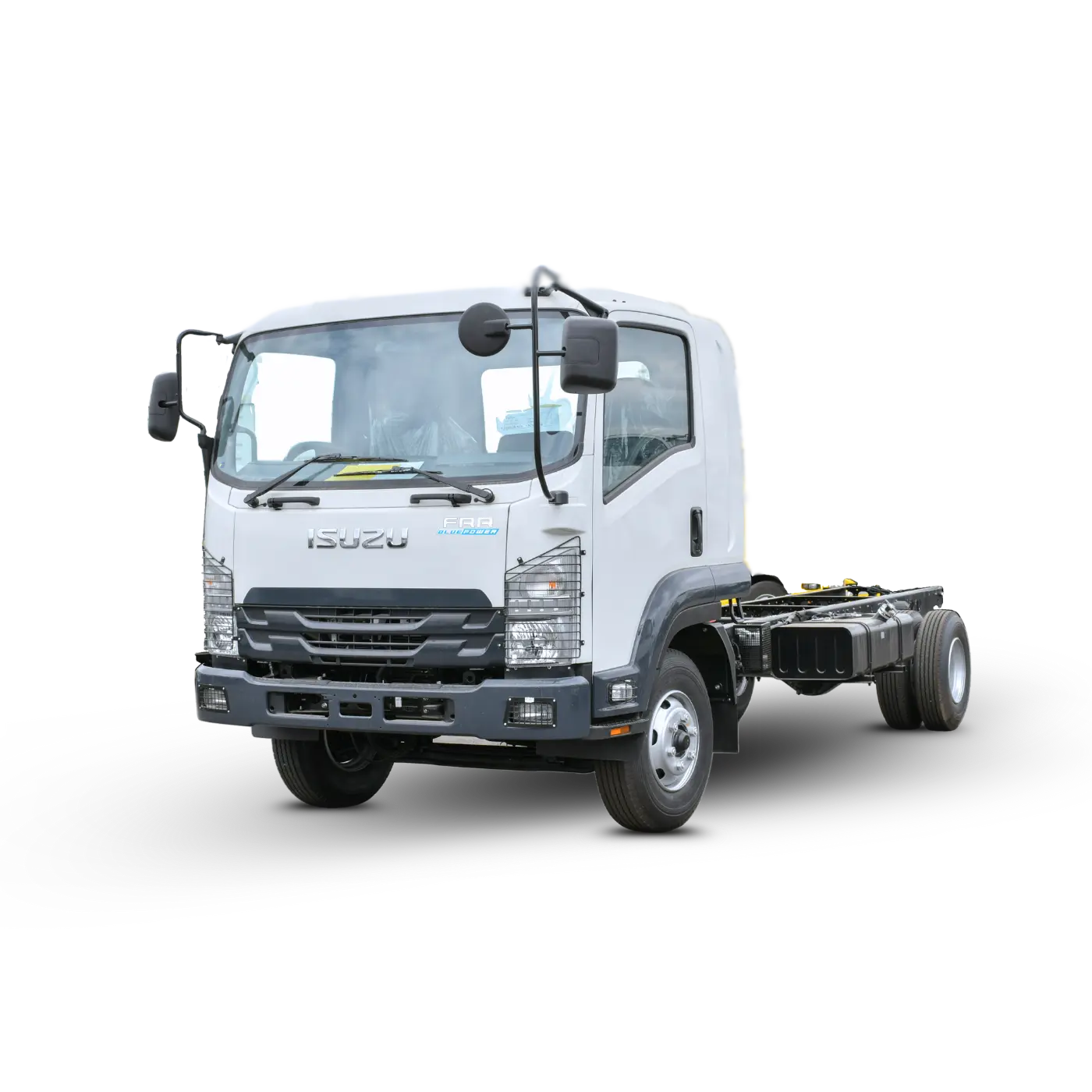
F-Series (Medium to Heavy-Duty)
The F-Series (Forward) is built for serious tonnage.
- FRR 90: The undisputed king of medium-duty. Highly versatile for cargo and often converted into 33-seater buses.
- FVR 90: A heavier 4x2 rigid chassis designed for regional haulage.
- FVZ / FTS: 6x4 and 4x4 configurations designed for off-road, construction, and severe-duty.
Passenger & Lifestyle
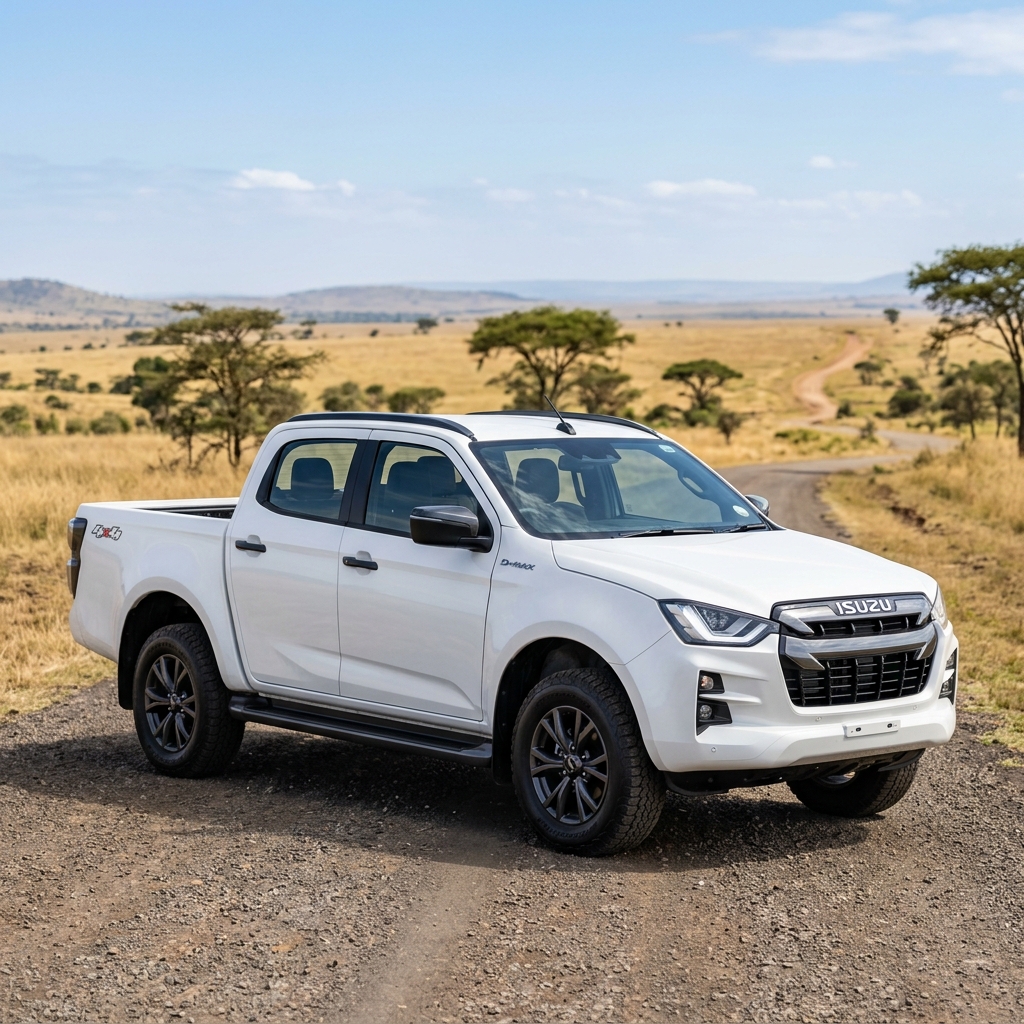
The Isuzu D-Max
The D-Max is a global phenomenon. Available in Single Cab, Extended Cab, and Double Cab configurations, it serves both as a rugged farm implement and a luxurious family vehicle. The latest generation features Advanced Driver Assistance Systems (ADAS), a massive infotainment screen, and a wading depth of 800mm.
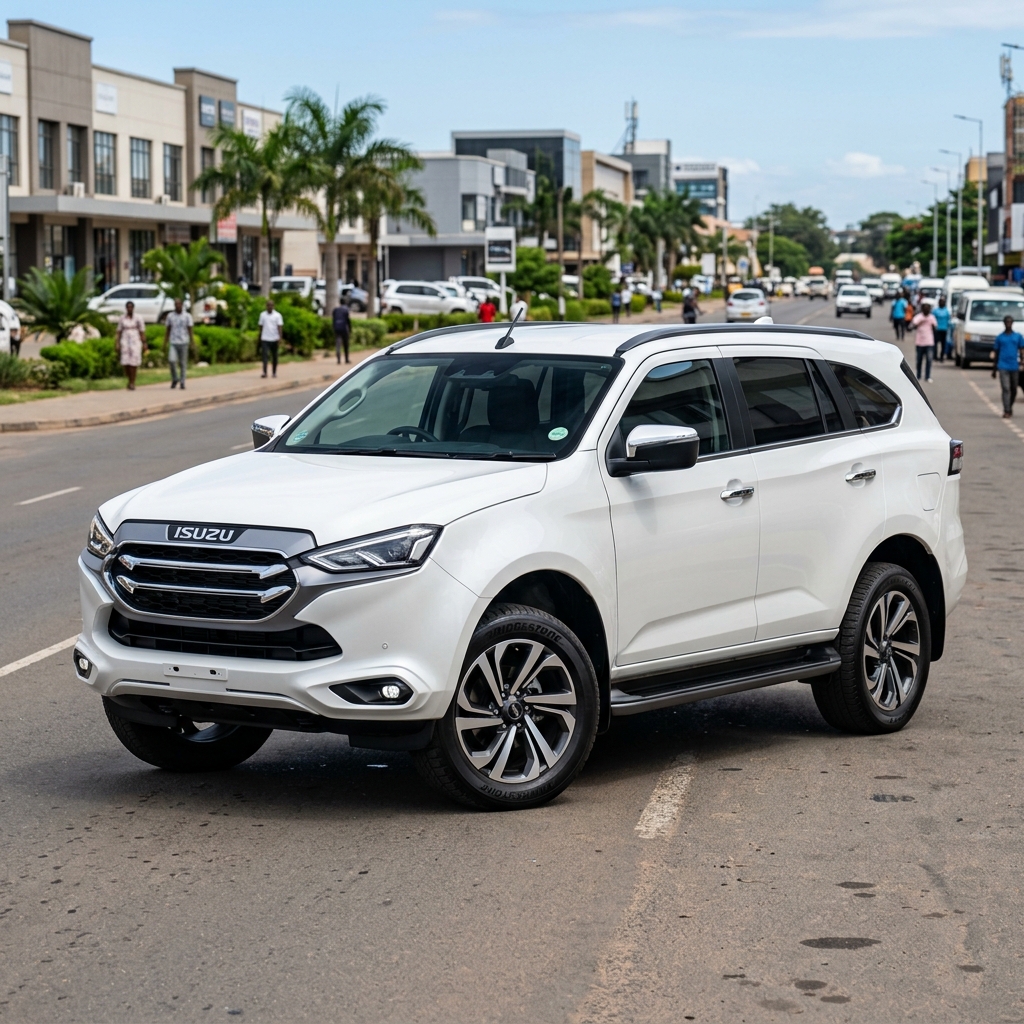
The Isuzu mu-X
The mu-X is a 7-seater SUV built on the D-Max chassis. It offers a luxurious interior, superior ride comfort via a multi-link coil suspension, and the same bulletproof 3.0L engine. It is the vehicle of choice for families demanding safety, space, and off-road capability.
Maintenance & Genuine Parts
Owning an Isuzu is an investment. Protecting that investment requires proper care and adherence to factory maintenance schedules.
Genuine Parts Only
Always use Isuzu Best Value Parts (BVP) or Genuine Parts. They undergo rigorous testing to meet Isuzu's exact specifications. Non-genuine oil filters, for example, can restrict flow and cause catastrophic turbo failure.
MaxIT Telematics
Modern Isuzu commercial vehicles can be fitted with MaxIT, a sophisticated fleet management system. It provides real-time data on fuel consumption, driver behavior, and engine health.
Authorized Service Centers
Edwin Kibira Isuzu Sales boasts diagnostic equipment (like the Isuzu G-IDSS) that unauthorized mechanics simply do not have access to, ensuring accurate troubleshooting and software updates.
Global Isuzu FAQ
Where are Isuzu vehicles manufactured?
Isuzu vehicles are primarily manufactured in Japan, with major production facilities in Fujisawa and Tochigi. However, Isuzu has a massive global footprint with assembly plants in countries like Thailand (a major hub for the D-Max), China, India, and Kenya, ensuring localized production for global markets.
What makes the Isuzu D-Max so reliable?
The Isuzu D-Max's legendary reliability stems from its commercial vehicle DNA. Unlike many competitors, the D-Max is built on a truck chassis and utilizes engines like the 3.0L 4JJ3-TCX, which are derived from heavy-duty commercial truck engines, designed for millions of kilometers of abuse.
What is the difference between Isuzu N-Series and F-Series?
The N-Series (Elf) represents Isuzu's light-duty truck range, perfect for urban deliveries, retail distribution, and lighter payloads. The F-Series (Forward) is the medium-duty range, designed for heavier payloads, longer inter-city hauls, and more demanding construction or logistical applications.
How often should I service my Isuzu truck?
Service intervals depend on the specific model, engine, and operating conditions. Generally, for commercial trucks operating in severe conditions, servicing every 10,000 to 15,000 kilometers is recommended. Always consult your owner's manual or an authorized dealer like Edwin Kibira Isuzu Sales for a tailored maintenance plan.
Are genuine Isuzu parts worth the cost?
Absolutely. Genuine Isuzu parts are engineered specifically for your vehicle, ensuring exact fitment, optimal performance, and longevity. Using aftermarket parts can lead to premature wear, reduced fuel efficiency, and potentially voiding your warranty.
Ready to experience Isuzu excellence?
Whether you are expanding a logistics fleet or looking for a durable passenger vehicle, we have the perfect Isuzu for you.
Contact Us Today